




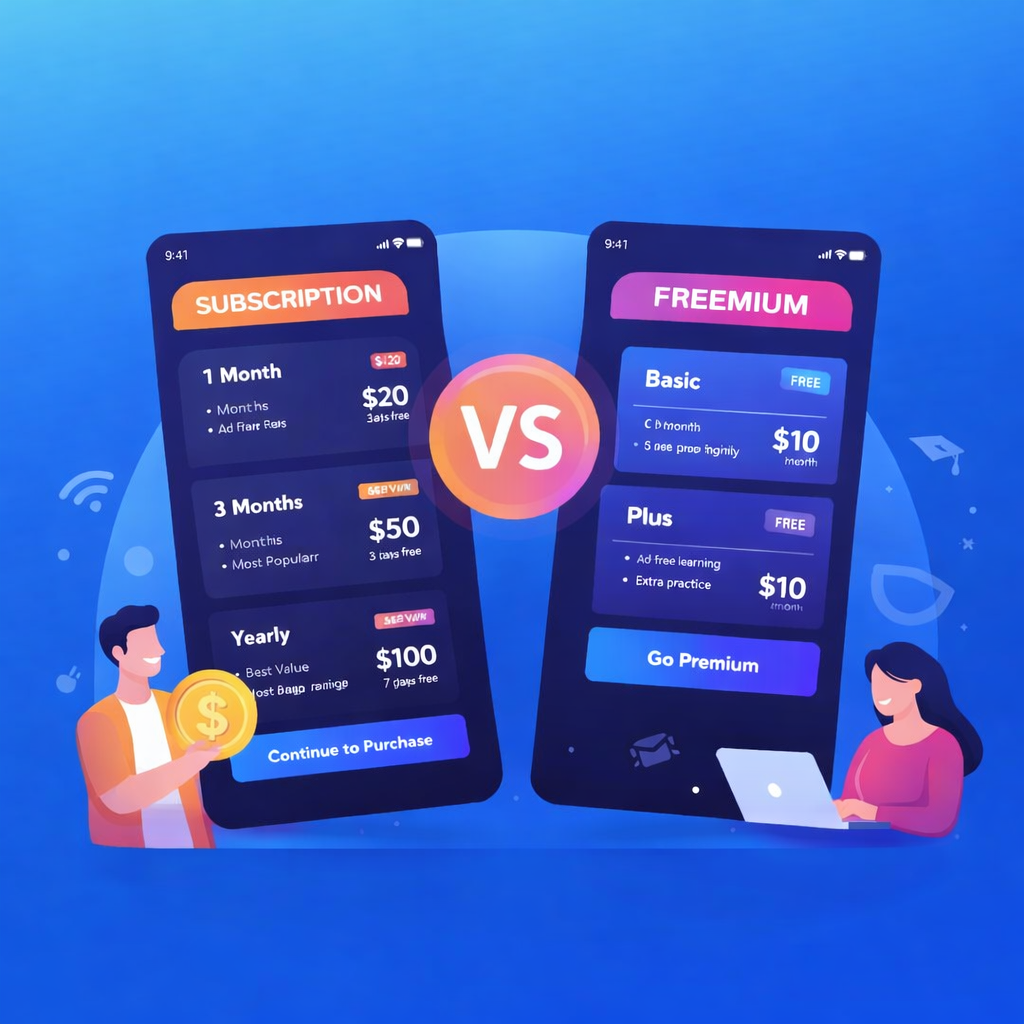
The rapid expansion of digital learning has transformed how education is delivered and consumed. As online platforms continue to grow, choosing the right monetization strategy has become a critical decision for EdTech companies. Among the most popular EdTech models, subscription and freemium approaches stand out as the most widely adopted. Each model offers unique benefits, challenges, and growth opportunities, making it essential to understand what works best in today’s competitive EdTech landscape.
The Importance of Monetization in EdTech Models
Monetization plays a crucial role in determining the sustainability of EdTech platforms. Unlike traditional software products, education services must strike a balance between affordability and value. Learners expect quality content, measurable outcomes, and flexibility, while businesses require consistent revenue to invest in content development, technology, and support. This is why selecting the right EdTech model directly influences user acquisition, engagement, and long-term success.
Understanding the Subscription Model in EdTech
The subscription-based EdTech model requires users to pay a recurring fee, typically monthly or annually, for access to courses, tools, or learning resources. This model is commonly used by platforms offering professional certifications, skill-based learning, or structured educational programs.
One of the key advantages of subscription-based EdTech models is predictable revenue. Recurring payments help companies forecast income more accurately and plan for future growth. Additionally, paying users tend to be more committed to their learning journey, resulting in higher engagement and completion rates.
However, subscription models can also present challenges. New users may hesitate to commit financially without first experiencing the platform’s value. To overcome this, many EdTech companies offer free trials, introductory discounts, or limited-access content to encourage sign-ups.
Understanding the Freemium Model in EdTech
The freemium EdTech model allows users to access basic features or content for free, while advanced features, premium courses, or certifications require payment. This model is especially popular among language learning apps, student-focused platforms, and beginner-level education tools.
Freemium is one of the most accessible EdTech models because it removes the initial payment barrier. This approach enables platforms to attract a large user base quickly and build brand awareness. Users can explore the platform at their own pace, making them more likely to trust the product before upgrading.
Despite its advantages, the freemium model relies heavily on conversion rates. Many users may never move beyond the free tier, which can impact profitability. Successful freemium EdTech models clearly differentiate premium features and consistently demonstrate added value to encourage upgrades.
Subscription vs Freemium: Comparing EdTech Models
When comparing subscription and freemium EdTech models, the choice often depends on the target audience and learning objectives. Subscription models are more suitable for professionals, corporate learners, and users seeking in-depth education or certifications. These learners are generally willing to pay for high-quality, outcome-driven content.
Freemium models are better suited for mass-market audiences, including students, casual learners, and first-time users. By offering free access, platforms can rapidly scale their user base and later monetize through premium features or add-ons.
From a revenue perspective, subscription-based EdTech models provide stability and higher average revenue per user. Freemium models, while less predictable, excel at growth and user acquisition, making them ideal for early-stage startups.
User Engagement and Retention Across EdTech Models
User engagement varies significantly between different EdTech models. Subscription users often show higher commitment, as paying for access creates a sense of accountability. These users are more likely to complete courses and engage with advanced features.
Freemium users demonstrate diverse engagement patterns. While some users remain inactive, others become highly engaged and eventually convert to paid plans. To improve retention, freemium EdTech models often incorporate gamification, personalized learning paths, reminders, and progress tracking.
Revenue Growth and Scalability
Scalability is another key factor when evaluating EdTech models. Freemium platforms can scale rapidly due to their low entry barrier, but operational costs increase as the user base grows. Managing support, infrastructure, and content delivery for free users requires careful planning.
Subscription-based EdTech models scale more gradually but offer consistent cash flow. With higher revenue per user, these platforms can more easily invest in innovation, instructor partnerships, and platform improvements.
Hybrid EdTech Models: A Balanced Approach
Many modern EdTech platforms are moving toward hybrid models that combine freemium access with subscription upgrades. This approach allows users to explore content for free while offering premium features for serious learners.
Hybrid EdTech models offer flexibility and adaptability, making them highly effective in competitive markets. By analyzing user behavior and preferences, platforms can refine pricing strategies and feature offerings to maximize both reach and revenue.
Choosing the Right EdTech Model
There is no one-size-fits-all solution when it comes to EdTech models. The ideal choice depends on factors such as audience demographics, content complexity, pricing sensitivity, and long-term business goals. Platforms focused on professional upskilling may benefit more from subscriptions, while those targeting large, diverse audiences may find freemium more effective.
Testing, user feedback, and data-driven decisions are essential for refining any EdTech model. As learner expectations continue to evolve, flexibility and innovation will remain key to success.
Conclusion
The debate around subscription vs freemium EdTech models highlights the importance of aligning monetization strategies with learner needs and business objectives. Subscription models deliver stability and engagement, while freemium models drive scale and accessibility. Ultimately, the most successful EdTech platforms are those that combine value, usability, and adaptability to create sustainable learning experiences in an ever-changing digital education landscape.